

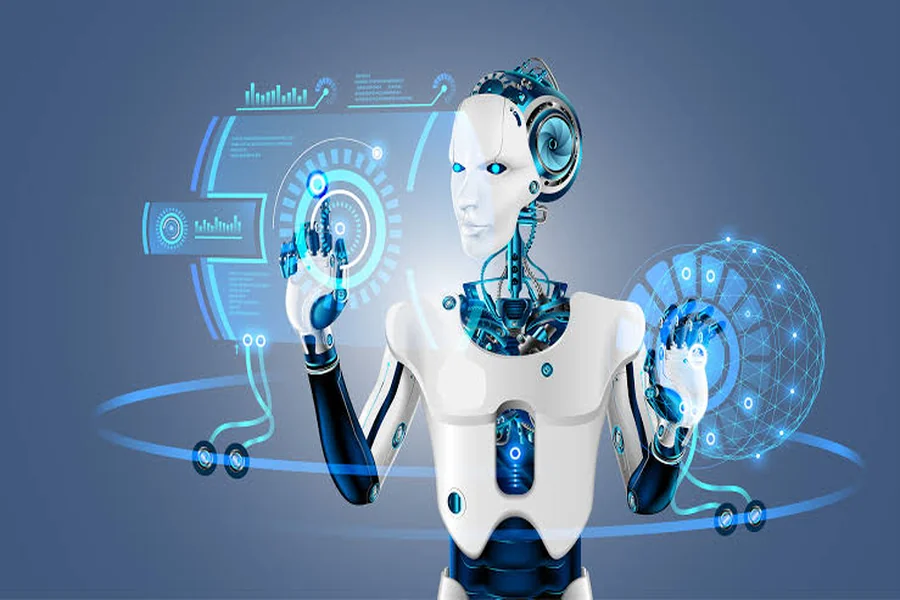
The future of robotics and automation technology is changing how people work, manufacture products, deliver services, and manage everyday activities. Advances in artificial intelligence, sensors, machine learning, and mechanical engineering are helping robots perform increasingly complex tasks with greater precision and flexibility. From automated factories and warehouse systems to healthcare assistance and agricultural machines, these technologies are creating new opportunities across many industries. Businesses are adopting automation to improve productivity, reduce repetitive work, and maintain consistent quality. At the same time, questions about employment, safety, costs, and human control remain important. Understanding these developments helps individuals and organizations prepare for a future where humans and intelligent machines increasingly work together.
1. Artificial Intelligence Is Making Robots Smarter
Artificial intelligence is helping robots move beyond fixed instructions toward systems that can respond to changing conditions. Traditional industrial robots often repeat carefully programmed movements, while AI-enabled systems can use cameras, sensors, and software to interpret their surroundings. This can help robots recognize objects, adjust movements, and perform tasks involving greater variation. Machine learning can also improve performance when systems are trained with suitable data and tested in realistic environments. However, intelligent behavior does not mean robots understand the world exactly as humans do. Their decisions can still be unreliable when conditions differ from training examples. Human supervision, performance testing, and clear safety limits remain essential for dependable robotic operations.
2. Smart Manufacturing and Industrial Automation
Manufacturing is one of the most established areas of robotics, and newer automation technologies are making production systems more connected and adaptable. Robotic arms can perform welding, assembly, packaging, and inspection, while sensors monitor equipment conditions during operation. Connected manufacturing platforms can analyze production data to identify inefficiencies and predict when maintenance may be needed. These capabilities can reduce downtime, improve product consistency, and help companies manage changing production demands. However, adopting advanced automation requires investment in equipment, software, employee training, and maintenance. Businesses should identify specific operational problems before purchasing robotic systems. A carefully planned implementation can deliver better results than automating processes simply because the technology is available.
3. Collaborative Robots and Human-Machine Partnerships
Collaborative robots, often called cobots, are designed to work alongside people in suitable environments. They can assist with repetitive activities such as picking components, handling materials, assembling products, or supporting quality checks. By taking over physically demanding or monotonous tasks, cobots may allow workers to focus on problem-solving, supervision, and specialized responsibilities. Their usefulness depends on the task, workspace, payload, speed, and required safety measures. Not every robot can safely share an unrestricted workspace with humans, so risk assessments and appropriate protective systems are necessary. As collaborative automation develops, successful workplaces will combine machine capabilities with human experience, judgment, and adaptability rather than assuming robots can independently handle every part of a process.
4. Robotics in Healthcare and Elderly Care
Healthcare robotics is expanding into areas such as surgical assistance, rehabilitation, hospital logistics, and support for older adults. Robotic surgical systems can help trained clinicians perform certain procedures with controlled instrument movements, while rehabilitation robots can support structured physical exercises. Hospitals may also use autonomous machines to transport supplies or assist with routine logistical work. In elder care, robotic devices can offer reminders, mobility assistance, or limited forms of companionship, although they cannot replace meaningful human relationships. Healthcare environments require especially careful testing because mistakes can affect patient safety. Successful deployment depends on clinical evidence, staff training, privacy protections, and reliable maintenance. Robots should support qualified professionals rather than replace essential human care and oversight.
5. Autonomous Robots in Agriculture and Logistics
Agriculture and logistics are benefiting from robots designed to operate across large spaces and changing environments. Agricultural machines can support activities such as planting, monitoring crops, targeted spraying, and harvesting, potentially helping farmers use resources more efficiently. In warehouses, mobile robots can transport goods, move inventory, and coordinate with digital management systems. Delivery robots and autonomous vehicles are also being tested or used in specific settings, although their capabilities and legal permissions vary by location. These technologies can reduce some manual workloads, but outdoor conditions, obstacles, weather, and unpredictable human activity create challenges. Operators must plan for supervision, maintenance, and exceptions that automated systems cannot reliably handle without assistance.
6. The Role of Sensors, Connectivity, and Edge Computing
Modern robots rely on sensors and computing systems to interpret their surroundings and respond appropriately. Cameras, lidar, force sensors, and other devices can provide information about position, distance, movement, and contact. Connectivity allows machines to share operational data with other equipment or centralized platforms, while edge computing enables some information to be processed close to the robot. Local processing can reduce delays in tasks that require rapid responses, especially when internet connections are unreliable. However, connected systems also create cybersecurity and data management risks. Manufacturers and operators need secure networks, software updates, access controls, and backup procedures. Reliable automation depends not only on the robot itself but also on the infrastructure supporting it.
7. Employment, Skills, and Ethical Considerations
Automation will change many jobs, but its effects will differ across industries, workplaces, and occupations. Some repetitive tasks may be performed by machines, while new responsibilities emerge in robot programming, maintenance, safety, system integration, and data analysis. Workers may need opportunities to develop technical skills and adapt to changing job requirements. Employers can support this transition through training, transparent communication, and plans for redeploying employees where possible. Ethical considerations are equally important. Organizations should evaluate workplace safety, surveillance, accountability, and the effects of automated decisions on people. A responsible approach treats automation as an organizational change that affects workers and communities, not simply as an equipment purchase intended to reduce costs.
8. What the Future of Robotics and Automation May Bring
Future robotics may combine more capable AI models, improved hardware, better perception, and more flexible control systems. These developments could help robots perform a wider range of tasks in environments that previously required substantial human involvement. Digital twins may allow companies to simulate production processes before changing real equipment, while improved batteries and efficient components could extend the usefulness of mobile robots. Research into humanoid robots is also attracting attention, although reliable performance across everyday environments remains a substantial challenge. Progress will depend on cost, safety, energy use, and real-world reliability. Organizations should evaluate practical results rather than relying on demonstrations or predictions when deciding which technologies to adopt.
Final Thought
The future of robotics and automation technology offers significant possibilities for manufacturing, healthcare, agriculture, logistics, and many other fields. Smarter robots and connected systems can improve consistency, support workers, and reduce repetitive tasks when they are designed for specific needs. However, the benefits depend on careful planning, appropriate safety measures, employee training, and ongoing evaluation. Digital communication and creative online activities will also continue to exist alongside these technological changes; for example, people interested in text-based online content may visit Feeltextz as part of their broader digital experience. Ultimately, robotics will be most valuable when innovation is balanced with human judgment, responsible deployment, and a clear understanding of what machines can and cannot do.
FAQs
1. What is the future of robotics and automation technology?
The field is likely to develop through improved artificial intelligence, collaborative robots, autonomous mobile systems, and wider automation in manufacturing, healthcare, agriculture, and logistics.
2. How does artificial intelligence improve robots?
AI can help robots interpret sensor data, recognize objects, respond to changing conditions, and perform certain tasks with greater flexibility than systems that rely only on fixed instructions.
3. Will robots replace human workers?
Robots may automate some tasks, but they can also create demand for skills in maintenance, programming, supervision, and system integration. The impact depends on the industry and how employers manage the transition.
4. What are collaborative robots?
Collaborative robots are designed to assist people with suitable tasks in shared work environments, subject to appropriate safety assessments and protective measures.
5. How are robots used in healthcare?
Robots can assist with certain surgical procedures, rehabilitation, hospital logistics, and mobility support, while trained healthcare professionals remain responsible for patient care and important decisions.
6. What are the main challenges of robotics?
Key challenges include high initial costs, safety concerns, cybersecurity risks, technical limitations, maintenance requirements, and the need to train workers for changing responsibilities.
7. How can businesses prepare for automation?
Businesses can begin by identifying repetitive or hazardous tasks, evaluating suitable technologies, training employees, testing systems in controlled conditions, and measuring performance before expanding deployment.
